Paperback
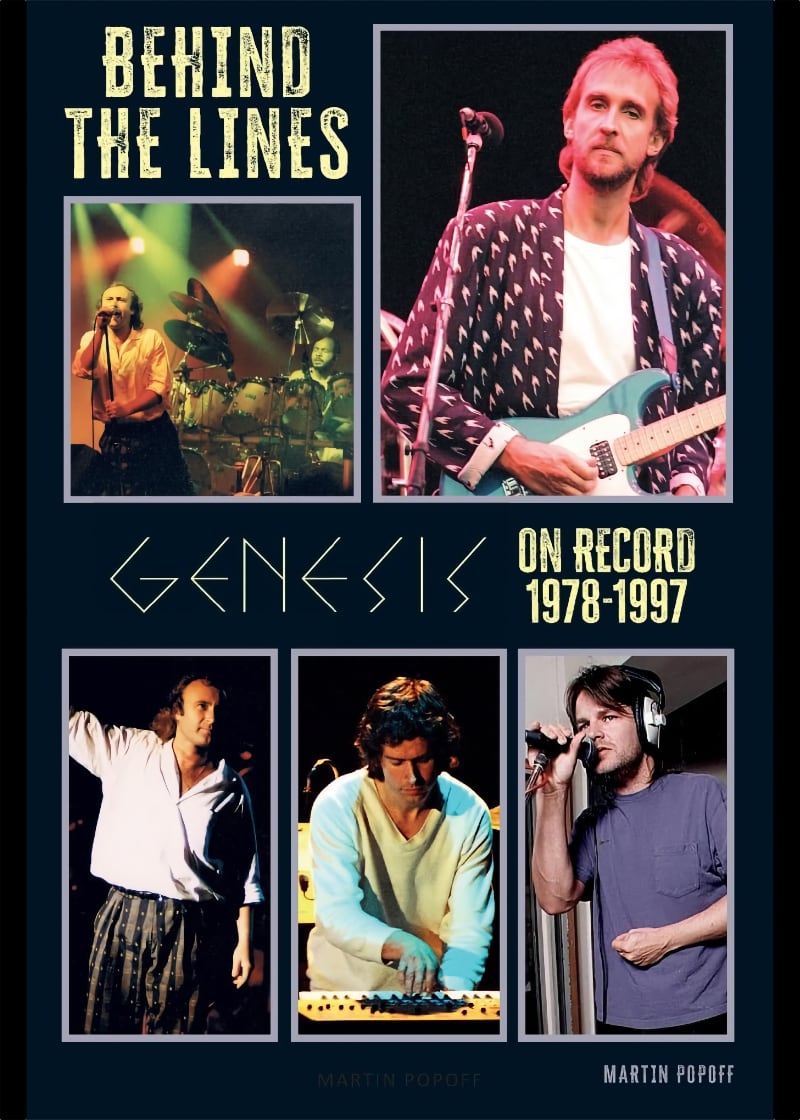
Behind the Lines: Genesis on Record: 1978 – 1997
is a deep dive into each of the first eight Genesis albums, from the poppy debut with strings through to the last one with Steve Hackett, Wind & Wuthering. We head down the rabbit hutch for fully 250 pages, and hopefully at the end of it, this intimidating bank of prog classics will become even still warmer in your heart.
As the back cover sez:
In this revelatory follow-up to Entangled: Genesis on Record 1969 – 1976, Martin Popoff, also author of multiple books on Yes and Pink Floyd, re-assembles his team of progressive rock experts to tacked the second half of the Genesis catalogue, namely: And Then There Were Three, Duke, Abacab, Genesis, Invisible Touch, We Can’t Dance and finally… Calling All Stations.
And defying possibility, the angles and opinions and concepts on offer are even more fresh and intriguing than those suggested in the first book. Perhaps that’s because the second half of the Genesis catalogue has never been discussed this fervently and sincerely, given the band’s embracing of pop conventions and the smash, multi-platinum success Phil Collins, Tony Banks and Mike Rutherford enjoyed because of it.
But the bottom line is this: if you were looking the have the art across these records highlighted and validated for you, then Popoff’s panel of progressive pronouncers are at your service. Indeed, Martin is confident that after you read what these guys have to say, you’ll be scurrying back to the albums looking for any number of the hundreds of details celebrated in these Q&A chapters of yummy music talk.
Additional message to you (i.e. after the end of the back cover!): Upholding the tradition of these books, there is an eight-page colour section plus memorabilia shots for each album, looking at singles, variants, tour posters and the like. There are loads of great new takes (some of them hot) across a hefty 250 pages.
I’m using the structure of the books you know and love on Rainbow, The Cure, Blue Öyster Cult, Robert Plant, Thin Lizzy and of course the early-days Genesis book—and all of those are still available!
I’m your pull-no-punches moderator and I present the panel’s arguments in easy-to-read Q&A format. It’s hope that by the end of this quite scholarly exercise, even the intimidating Geneses scholars among you will find multiple new ways to approach and enjoy this often maligned end of the Genesis catalogue.